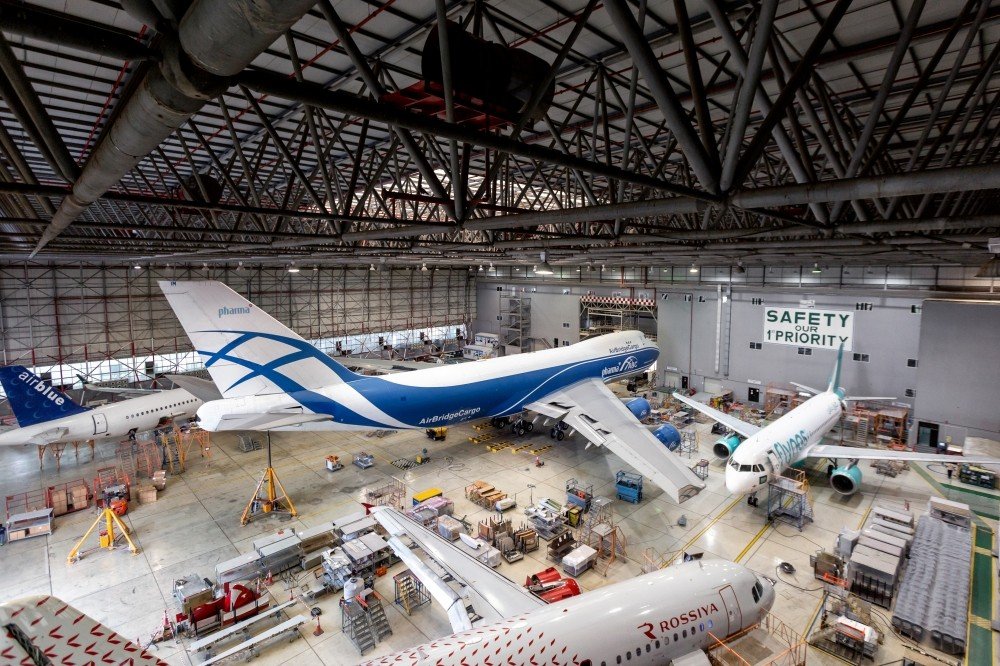
Aircraft Maintenance Engineering (AME) remains a strong career choice in 2026, especially in India, due to booming aviation growth and MRO expansion. Demand is high amid fleet additions and policy support like UDAN and Make in India.

Aircraft Maintenance Engineering (AME) stands as a backbone of the aviation industry, ensuring every flight’s safety through proper inspections, repairs, and certifications. In 2026, with India’s aviation sector exploding—fueled by fleet doublings, MRO hubs, and tech like electric propulsion—AME emerges as a top career pick. Driven by India’s aviation boom with 2,000+ new aircraft by 2030 needing 30,000+ AMEs. Salaries start at ₹25k-50k/month for freshers, rise to ₹35k-80k /month for Technicians , and hit ₹1L+ for AMEs.
AME As a Career
Those who have completed Class 12 with Physics, Chemistry, and Mathematics—and possess a genuine passion for physics as a subject along with a keen interest in aeroplanes, helicopters, aircraft, and their engineering mechanisms—will find Aircraft Maintenance Engineering (AME) an ideal career path. I strongly recommend this field for such individuals, as their foundational knowledge and enthusiasm align perfectly with the technical demands of aviation maintenance.
Conversely, for those lacking interest in physics or aviation engineering—perhaps pursuing AME due to family expectations or external pressures—I advise against entering this profession. Success in AME requires intrinsic motivation and aptitude, not obligation, to thrive in its rigorous, hands-on environment.
AME Field & Dedication
If you are truly dedicated to aviation and Aircraft Maintenance Engineering (AME), then this rigorous professional course is an excellent choice. However, admission should only follow careful self-assessment, as developing disinterest midway can undermine your success.
Consider subjects like DGCA CAR regulations, Human Factors, Basic Aerodynamics, Electrical Systems, and Electronics Fundamentals—the core of AME training. Without genuine engagement, mastering these proves challenging and unfulfilling, rendering the investment of time and resources ineffective.
I strongly recommend verifying your passion and aptitude before committing to AME as a career. This ensures sustained motivation in a demanding field where enthusiasm drives excellence.
Salary Growth in AME Field: From Freshers to Seniors
Salaries reflect skill, license, and location— Freshers earns around ₹3-6 lakhs annually (₹25k-50k monthly) in airlines like SpiceJet, indigo, Airindia etc. or entry MROs. These roles involve basic checks on structures or avionics, building toward DGCA CAR-66 licensing. The Table Given Below Clearly shows the Experience Level, Annual Salary,Monthly Avg, and key employers & Perks.
Industry Demand
India’s aviation sector eyes 2,000+ new aircraft by 2030, needing 30,000+ AMEs soon, fueled by MRO revenue tripling to $6.9B by 2030. Globally, 600,000+ AMEs required by 2040s; locally, new facilities (e.g., IndiGo Bengaluru, HAL) and 50% MRO growth in 2026 create jobs.
India targets 2,000+ aircraft by 2030, creating 30,000+ AME jobs amid MRO tripling to $6.9 billion. Policies like UDAN and new hubs (IndiGo Bengaluru, HAL Nashik) fuel 50% MRO growth this year.
Globally, 600,000+ AMEs needed by 2040s, with India’s edge in hybrid propulsion and drones.
Future Scope & Opportunities
Demand screams opportunity. India’s fleet hits 2,000+ aircraft by 2030, needing 30,000+ AMEs urgently. MRO revenue triples to $6.9B by 2030 (11.8% CAGR), with 50% growth in 2026 alone from policy reforms. New facilities—IndiGo’s ₹1,100cr Bengaluru hub, HAL Nashik—hire en masse. Globally, 600k+ AMEs required by 2040s as fleets modernize.
Final Conclusion
Aircraft Maintenance Engineering in 2026 is a solid, long-term, skill-based career with global opportunities — but it requires patience, commitment, and technical passion.
If you are serious, disciplined, and ready for licensing challenges, it can become a highly rewarding and respected profession.